Imagine Nashville: Developing a City Where Everyone Belongs
In 2023, Imagine Nashville conducted a survey asking residents of Davidson County, Tennessee, a deceptively simple question.
“If you could change one thing to make your community a better place to live, what would it be?”
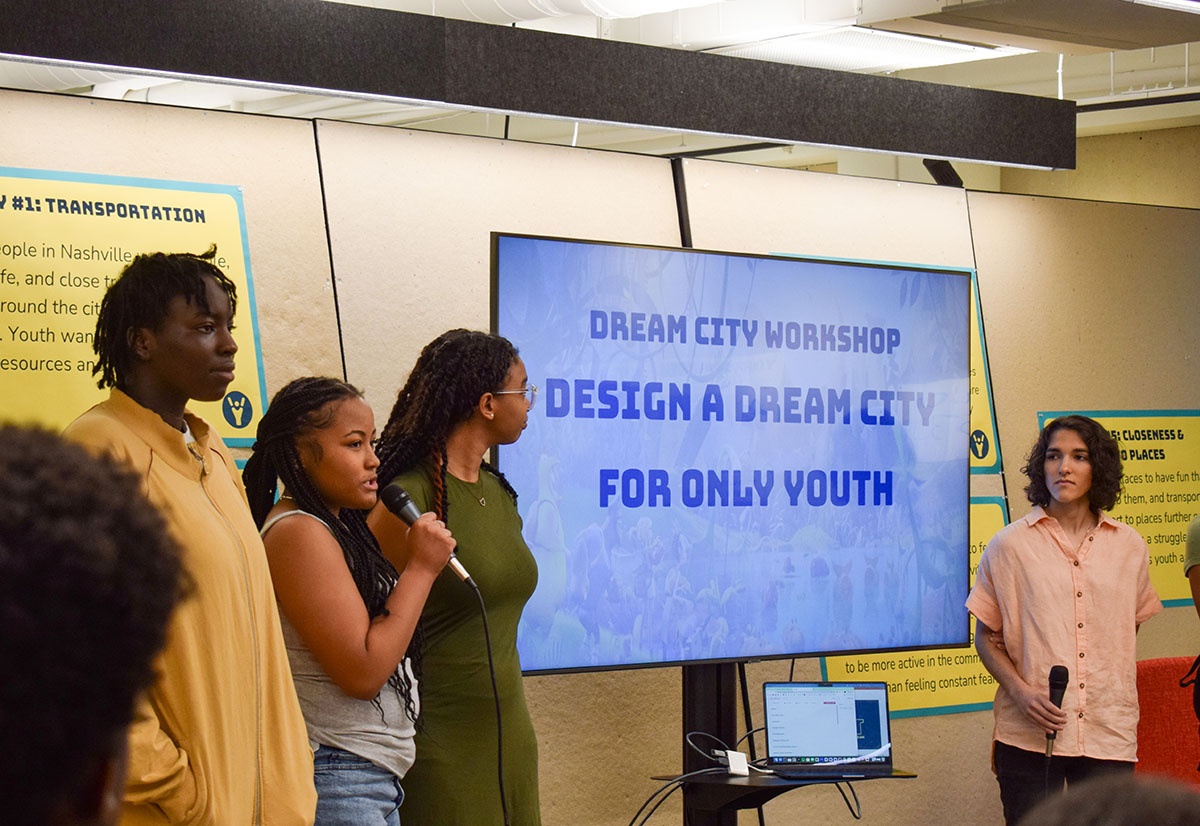
The survey generated more than 10,000 answers from residents, with responses running the gamut from traffic to public transit to housing prices, a rising cost of living, and the feeling that growth had gone too far.
The same found that 78% of residents feel they belong in Nashville. Yet 72% see a growing divide between rich and poor, and 57% of low-income families feel increasingly shut out of what the city has to offer.
"People who have had their roots here for a long time felt that all this 'new' was deteriorating the core and the heart of Nashville," said Kelly Walberg, vice president of communications at the Community Foundation of Middle Tennessee (CFMT).
The answers also showed a city pulling in two directions. Longtime residents worried about losing the place they knew, while many newcomers, including immigrant and refugee families, were still waiting to feel at home. The harder question for Nashville was how to keep growing without leaving people behind.
Listening Deeper
CFMT served as a convener. Working with a 26-member steering committee, the foundation launched Imagine Nashville to shape a vision for the city's next decade. With the help of neighborhood groups, civic organizations, businesses, and nonprofits, the team connected with communities across the county to find out what residents wanted.
For 14 months, the team tried to get past what people liked or disliked – and to understand why. They held one-on-one interviews, ran weeklong conversations online, and fielded the survey.

If growth wasn't going to leave anyone behind, the process couldn't leave anyone out either. No voice was treated as too big or too small. Young people took part, as did families that had been in Nashville for generations and people who had just moved in.
Community members and city leaders were all asked the same questions. Government, business, academia, and community members sat at the same table and worked through what they heard together.
Turning Ideas into Action
In October 2024, Imagine Nashville released a report with more than 30 “Ideas for Action.” The ideas are organized around four priorities: a higher standard of living, safe and efficient mobility, attainable and affordable housing, and neighborhood character and quality of life. Together, the priorities reflect what people need to stay rooted in a busy, changing city.
The report doesn’t leave implementation to the government alone. Rather, it specifies roles for businesses, nonprofits, philanthropy, and residents, all around a broader goal of "strengthening residents' sense of belonging," Walberg explained.
Today the work is in its second phase. CFMT is forming implementation teams for each priority and working with the mayor's office to turn ideas into specific recommendations. Yearly check-ins will help keep everyone accountable for results that residents can see and feel in their daily lives.
Continuing to Listen
CFMT calls its approach “community and collaboration,” which means learning from residents and adjusting as their needs change. "Don't just assume that what worked 20 years ago for your community is what's going to work 20 years from now and get community voices at the table to really understand," Walberg says.
Nashville will keep changing. If residents keep shaping that change, more of them can stay rooted as the city grows.