When the Hardest Conversations are with Our Allies
Experts offer strategies for navigating differences within your own group.
America’s bitter divisions can’t be addressed simply by bringing together people with opposing views. Some of the most important work happens within our own political, religious, and social groups.
That’s a lesson Braver Angels learned after the 2016 election. The organization initially focused on bringing political opposites together across the red-blue divide. But within a few years, it realized that people also needed tools to challenge polarization among their allies. “Most of the rhetoric driving toxic polarization in this country comes from within each group, where people feel safer to express their outrage,” says co-founder Bill Doherty.
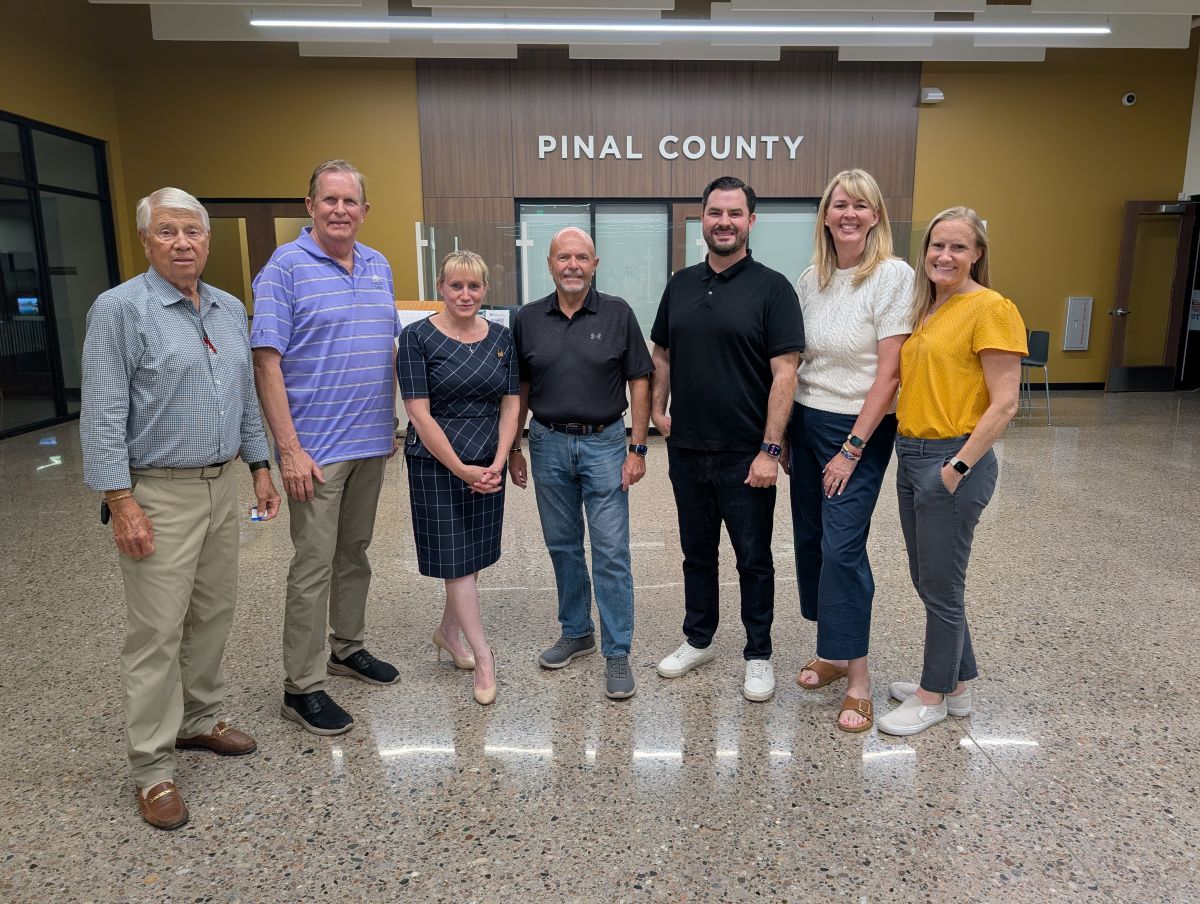
Conservative Leadership for A United America (CLUA) Central Arizona Team.
In 2019, the organization launched Depolarizing Within, a workshop that gives people within partisan groups the skills and strategies to tamp down incendiary behavior within their political groups. A randomized controlled study found it effective, with researchers concluding: “It is promising that Americans can become less polarized without leaving the comfort of their own party.”
Braver Angels isn’t alone. Urban Rural Action recently launched the Conservative Leadership for a United America (CLUA), which helps local conservative leaders navigate differences on their own side as a means to making their communities safer and stronger. Also, One America Movement helps evangelical Christian, Jewish, and Muslim leaders confront toxic polarization in society and their congregations.
These groups aren’t championing moderate positions; they’re trying to make disagreement healthier — and to create the conditions for people to challenge their own side without abandoning their values.
“If we have the relatively same set of values, and we can't get along and speak respectfully to each other, how are we ever going to get along with the other half of the country?” says Stephanie Harbaugh, a CLUA leader in south-central Pennsylvania.
The William & Flora Hewlett Foundation supports CLUA and One America through its democracy program. “The American experiment has always depended not only on institutions but also on a set of civic virtues, including the willingness to persuade rather than coerce, to continue seeing political opponents as fellow citizens, and to remain invested in a shared future despite deep disagreements,” says democracy program officer Robin Stone. "Leaders working within their own communities are integral to shaping whether these values take root and endure over time."
Five Guidelines for Difficult Conversations
- Don’t assume you know someone’s priorities. A conservative woman, Stephanie Harbaugh of CLUA is often typecast as someone who cares most about abortion. Her priorities, however, are the First and Second amendments and the economy.
- Don’t take the moral high ground. “You can’t go in full of self-righteousness and guns blazing, like, ‘I’m a warrior for moderation,’” says Pearce Godwin, CLUA’s national program director.
- Synthesize what you’ve heard and play it back objectively. Ask follow-up questions to draw out detail and demonstrate curiosity. Strong emotions often point to a personal experience or even trauma that underlies a position. Most important, withhold criticism or judgment.
- Don't assume you know someone's intentions. Instead, gently probe for their logic and intentions. "Just ask them," Faraid says. "Why do you say that? What is your thinking behind that?"
- Share your own views. The goal isn’t to eliminate disagreement. At its best, the conversation models how people can hold different views while treating each other with respect. “If people are afraid to disagree, then what kind of community is that?” Rabbi Alexander says. “That's essentially a flattening of our humanity. It’s not only uninteresting, but it also doesn’t reflect the diverse realities of our communities.”
What it Takes
We asked leaders of these organizations what it takes to challenge polarizing behavior while maintaining relationships and respect.
When to Step In
Leaders typically respond to rhetoric that casts differences in good-versus-evil terms, demonize the other side, and frame disagreements as existential threats. Examples: “All immigration officers are monsters,” for instance, and “Muslims are terrorists.”
Such statements can deepen division and extremism. Responding effectively, they say, requires pushing back without inflaming tensions.
Start With Yourself
Participants in the Braver Angels workshop begin with a self-assessment to identify their feelings and attitudes that contribute to polarization. They examine how often they stereotype or disparage the other side, Doherty says. “That kind of personal work is really important. You have to understand what you do when you are triggered.”
The workshop then offers strategies to change those behaviors. Among the suggestions: seek out thought leaders on the other side who make complex arguments.
Choose the Right Setting
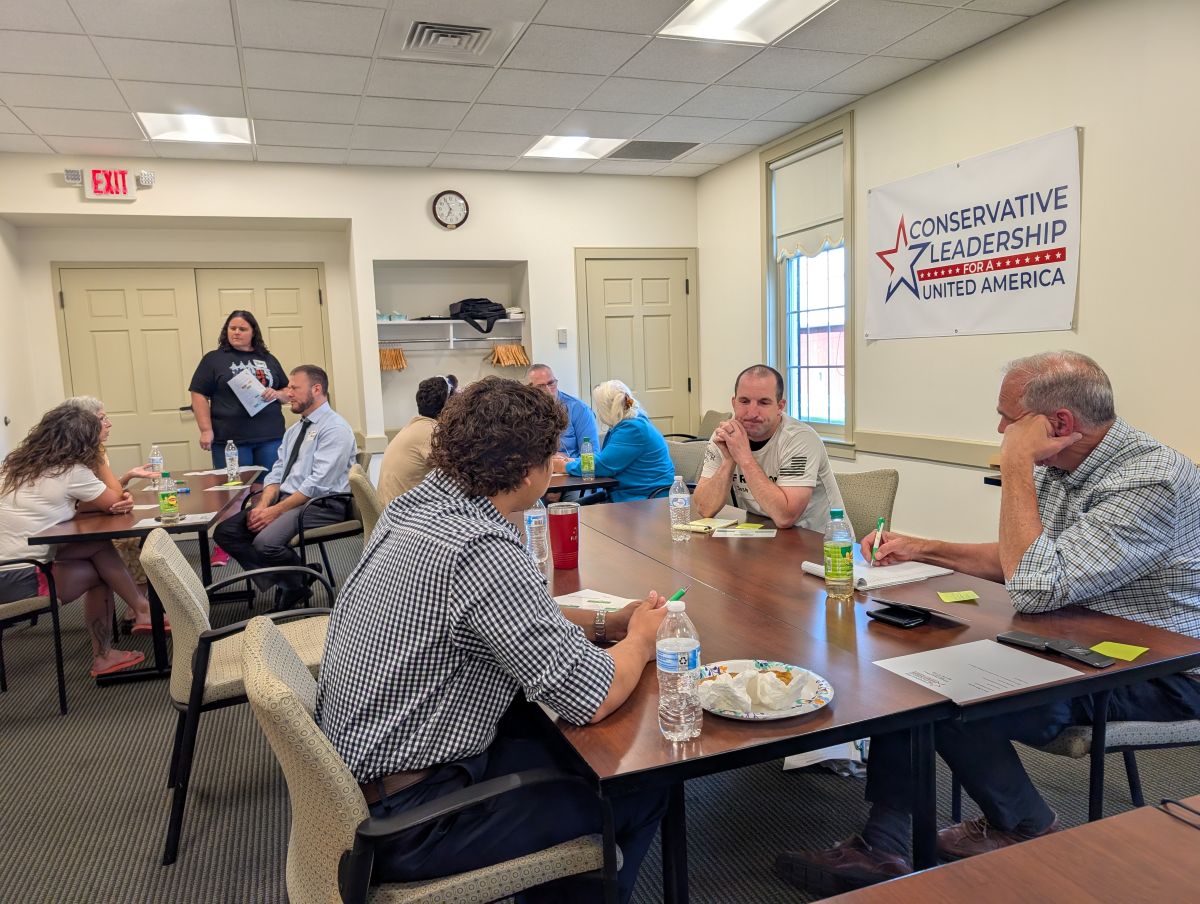
When confronted with polarizing behavior, some leaders find a moment to talk to the person privately, away from a group and its peer pressure. Braver Angels, meanwhile, trains individuals to speak up in the moment, even when others are present. “We’re equipping people for their everyday interactions within their group,” Doherty says. “When something is said that goes against your values or principles, you don’t have to just let it pass.”
Lead With Curiosity
The leaders open conversations by asking neutral questions to understand the values and principles behind someone’s position. An example: “You’re passionate about this, and I’m curious to learn more.”
Then they listen.
“You just listen until they're done, without interrupting or interjecting your own ideas or opinions,” says Hurunnessa Fariad, music director at the All Dulles Area Muslim Society (ADAMS) Center, a mosque in Northern Virginia.
Deep listening can make someone feel heard and respected, Fariad says. “Later, they're more likely to take in whatever you say to them.”
Build Trust
Some leaders say it helps to have a prior relationship or a credential that establishes credibility. At Adas Israel, congregational leaders consider who has the strongest connection to a particular person. “Who do they trust most? Who do they feel most comfortable with?” says Rabbi Aaron Alexander of Adas Israel synagogue in Washington, D.C. “It doesn't matter where any of us sit on the political spectrum.”
Relationships built through family, work, activities, and social groups are vital connections, says Pearce Godwin, CLUA’s national program director. “Whether you’re in a Facebook group, a county party meeting, or the early morning gathering of old guys at McDonalds on Friday morning, it'll carry weight because you’re part of the group.”
A relationship isn’t essential, Doherty says. “I’ve been influenced by just a conversation. The person was credible, and they gave me something to think about.”
Manage Your Reactions
Difficult conversations require controlling your own impulse. Fight the urge to formulate a response as someone talks and resist the desire to “win” the argument, says Rabbi Alexander. “Listening is impossible,” he jokes. “And it’s absolutely necessary.
Harbaugh says she softens her typically direct conversation style, which can come across as blunt and aggressive. “I hold to my principles and my values, but I just change the way I'm saying things.”
You may get offended or feel attacked. Don’t let that show, Fariad says. “Put your ego on a shelf before the conversation starts.”
Don’t Expect Immediate Change
These conversations aren’t intended to dissuade others from their political views. Nor are they likely to produce an immediate change in behavior. Instead, the leaders hope to plant the seeds for further conversation about an issue — and to demonstrate that disagreement can be managed with respect for each other.
“Some people will be influenced by your example and your proactive approach with those you care about,” Godwin says. “There's always a chance that influence will be felt down the road.”
Learn more about the Council's commitment to working across differences.