How 20 Chicagoans Came Together to Make $1.6 Million in Grants
Lessons from an ambitious participatory grantmaking pilot that brought together people from all walks of life.
Of the 20 Chicago residents deciding the grant awards, none was a grantmaker. One owned a coffee-roasting business; another a dessert and sweets company. A student intern deliberated alongside veterans of community development and organizing. A few had Ivy League degrees. One had spent time in prison.
Yet for the better part of a year, this group met on Zoom and in person to decide how to distribute $1.6 million from the Together Fund, part of a five-year initiative by The Chicago Community Trust to spur pandemic recovery in underinvested West Side and South Side neighborhoods. They went further than most participatory grantmaking efforts, designing the request for proposals, creating the application scoring rubric, and ultimately selecting 12 grantees from among 200 applicants.
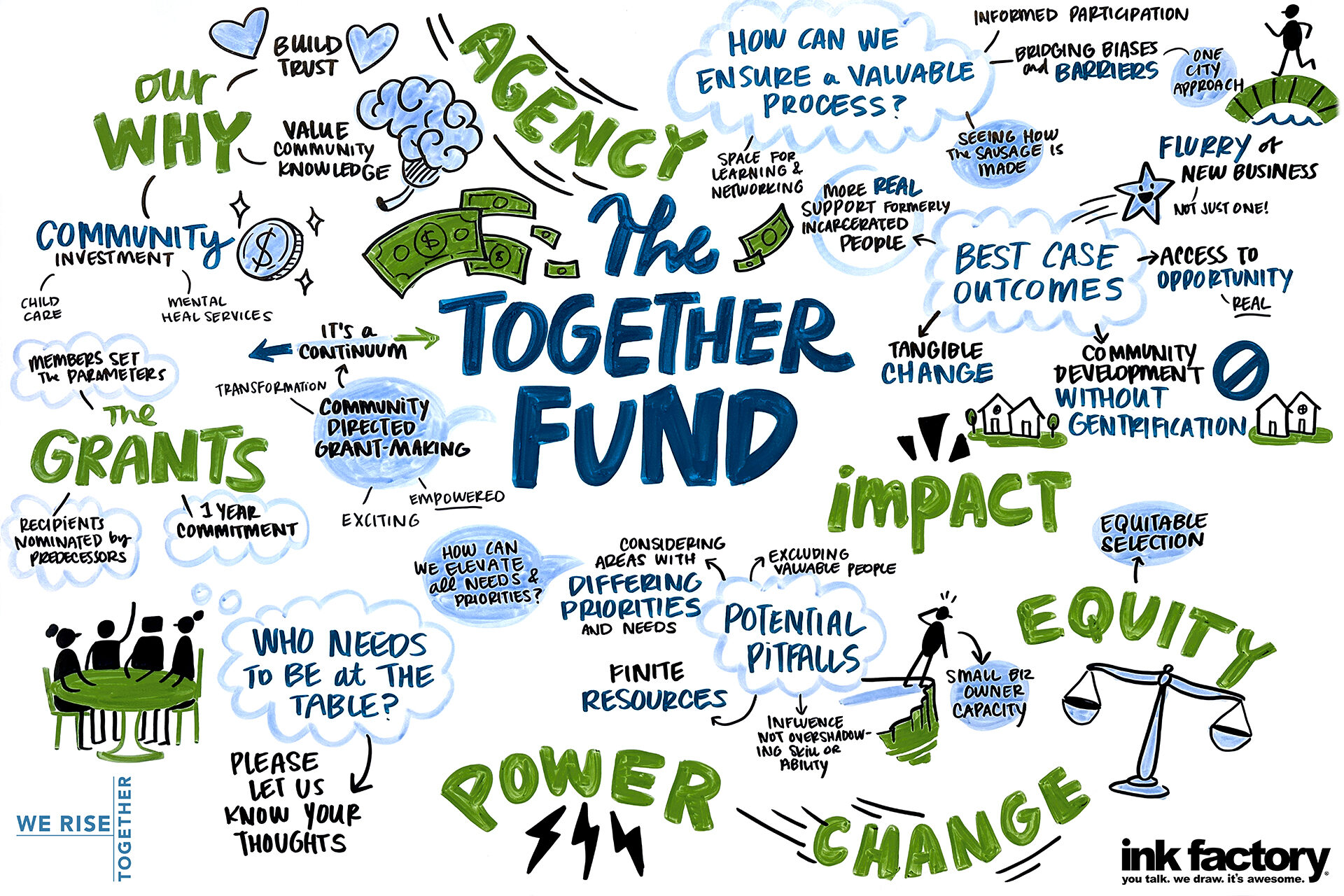
The 20 residents — called “community advisors” — served in two teams: one focused on local businesses and another on workforce development and access to quality jobs. Despite their varied backgrounds and the multitude of decisions, the process unfolded smoothly.
“There were a lot of strong opinions but not strong disagreements.” Christen Wiggins, Chicago Community Trust Senior Director of Community Development
Tips to Foster Trust and Shared Sense of Purpose
How did the Trust foster trust and a shared sense of purpose? Here are eight lessons from facilitators and participants.
1. Give participants ownership.
Grant advisories are often rigid, with scoring rubrics, priorities, and processes locked down before reviewers arrive, says Isaías Solís, a member of the workforce development team and the director of development for PODER, a workforce development organization on the southwest side of Chicago. The Together Fund took a very different approach, encouraging participants to shape the process from beginning to end. “Rather than simply inviting community voices to participate, the fund shared decision-making authority, making the process a true co-creation from beginning to end.”
2. Use outside facilitators.
The Trust enlisted two social-impact consultancies: Bold Ventures, a veteran of participatory grantmaking that specializes in reparative philanthropy, and Daylight, which brought human-centered design principles to the process. Trust staff intentionally did not facilitate discussions.
“It was incredibly helpful to have a third party there to provide a buffer between us as grantmakers and the community, to let them just relax a little bit and feel comfortable.” Maryah Phillips, Chicago Community Trust Program Manager
3. Seek diversity across every dimension.
Trust recruited residents with deep neighborhood knowledge and different viewpoints, life experiences, ages, identities, and professional backgrounds. The business team included leaders and coaches from a range of industries and company sizes. On the workforce-development team, social-service practitioners worked alongside technical experts.
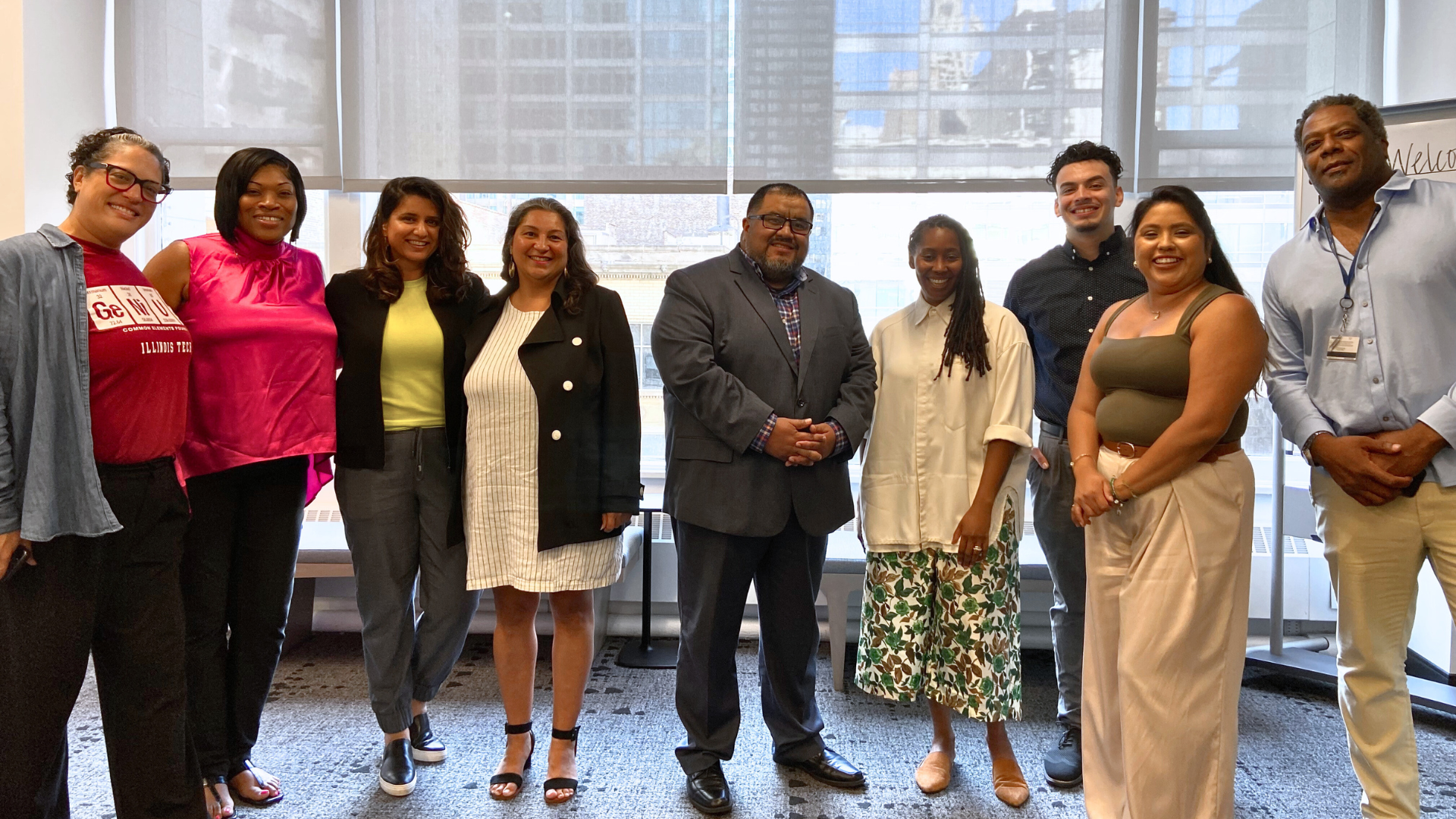
Critically, the Trust stepped back from the selection of advisors. Existing members of the We Rise Together steering committee — chiefly community and civic leaders — chose the participants, drawing on nominations from staff and previous program grantees. “It helped us identify people who might not always be tapped and lended some real legitimacy,” says Jessyca Dudley, founder and CEO of Bold Ventures. “We got a stronger pool of advisors than in any other participatory-grantmaking process that we've run.”
4. Invest in relationships.
The groups kicked off with trust- and team-building activities and established ground rules for discussion. Meetings opened with small-group conversations so advisors could connect personally. Facilitators also carved out time for members to share updates about their work and ask one another for help. Several collaborations emerged as a result.
5. Demonstrate trust before asking for it.
Before the first meeting, the Trust shared expectations and invited questions and suggestions. Each advisor received a $6,000 stipend, which they could keep personally or direct to an organization of their choice. The foundation also sought permission before sharing photos and let each group determine when and how its participation would be announced publicly.
“Those types of little things created a connection upfront and showed that we valued them and wanted to make sure that they also got value out of the experience,” Phillips says.
6. Build in time for reflection.
Facilitators didn’t force quick decisions on sticky issues. Instead, advisors brainstormed options for moving forward, adjourned, reflected, and voted later by email.
“It allowed heat of misalignment to dissipate into solutions.” Lyndon Valicenti, Daylight Founding Principal
7. Keep the focus on shared goals.
After advisors scored applications, facilitators did not ask them to debate each proposal individually and vote up or down. Instead, they held a “selection workshop” in which advisors championed their top three choices and discussed how to build a strong, balanced portfolio. The premise was simply: many organizations were worthy, but the goal was to create the greatest collective impact. “They're all doing important work,” Valicenti says, “but we focused on how the portfolio as a whole could address systemic issues and challenges.”
8. Stay flexible.
When the business team couldn’t decide between two funding priorities, the foundation encouraged advisors to include both in the RFP. “We said, ‘You guys don't have to fight between one or the other,’ ” Wiggins says. “Conflict resolution doesn't have to be a winner-take-all outcome.”
No Best Practices in Participatory Grantmaking
In the end, the business team awarded four grants totaling $800,000. The workforce group gave a similar amount to 11 organizations.
The Trust is now exploring ways to build on the Together Fund, in part because advisors’ on-the-ground knowledge steered funding in unexpected yet beneficial ways. Rather than emphasizing startups — the focus of a lot of entrepreneurship grantmaking — they favored mid-size ventures. The workforce team prioritized efforts to help young people start careers.
Another welcome surprise: advisors proved energetic ambassadors for the initiative, introducing the Trust to many organizations it had never worked with before. Most applicants had never sought funding from the foundation.
“There are no best practices around participatory grantmaking,” Dudley says. “But I know this experience will certainly change how we do things in the future.”