From Charity Bank to Community Leader
Innovia Foundation, winner of the Council on Foundations' Building Together Award, is creating community in a diverse, 40,000-square mile region.
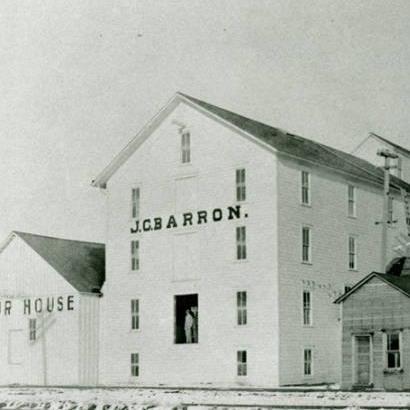
Four stories tall and sheathed in weathered wood siding, the J.C. Barron Mill has stood watch over Oakesdale, Wash., population 400, for nearly 140 years. Beloved by residents, it’s a landmark in the rolling hills of the surrounding Palouse farming region, one of the world’s biggest wheat producers.
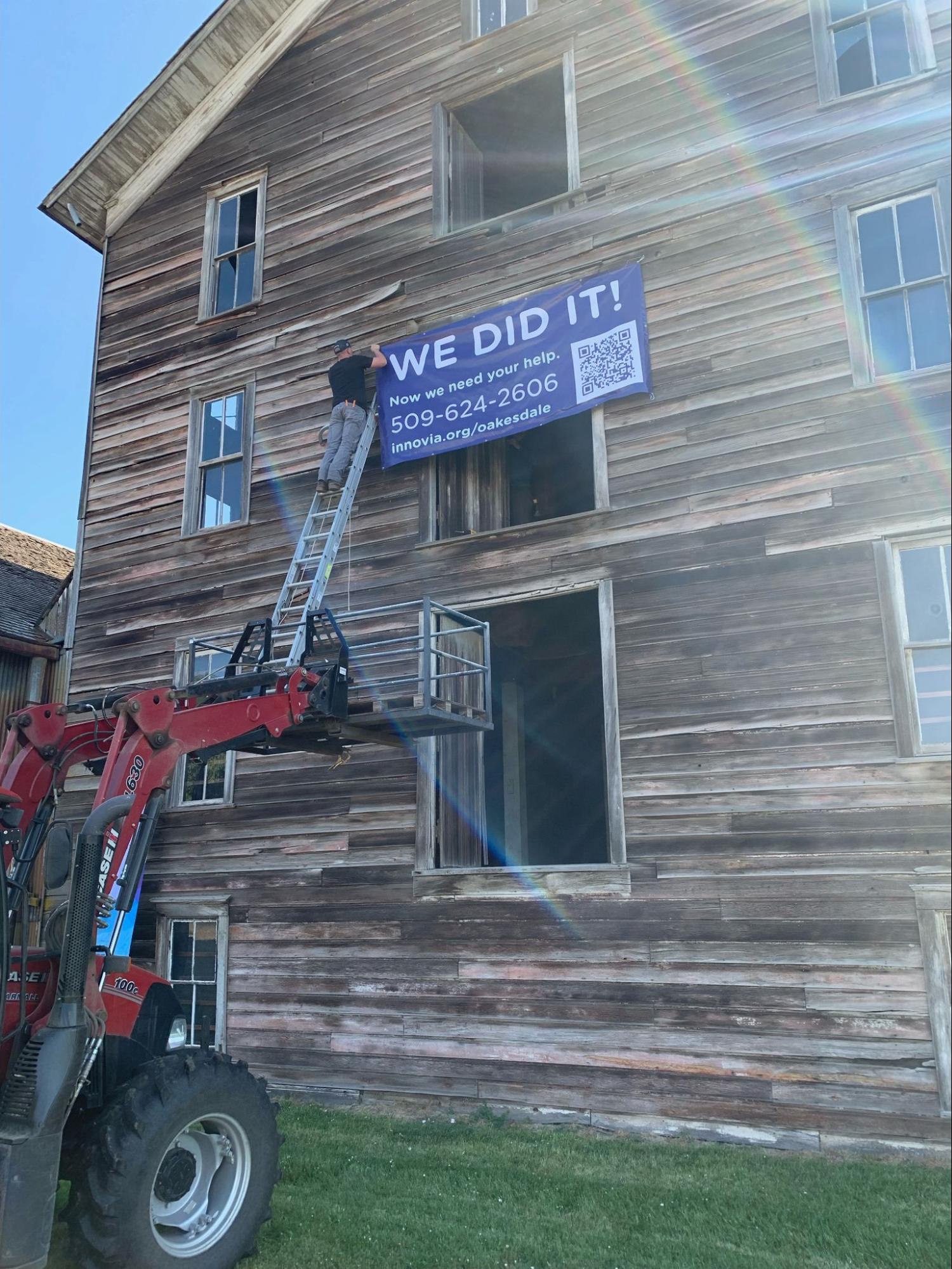
The mill, which closed in 1960, has fallen into disrepair in recent years. Soon, however, it will get a new roof and windows, first steps to transforming the building from a fading symbol of pride to a new community asset — the town’s first restaurant, perhaps, or an events center.
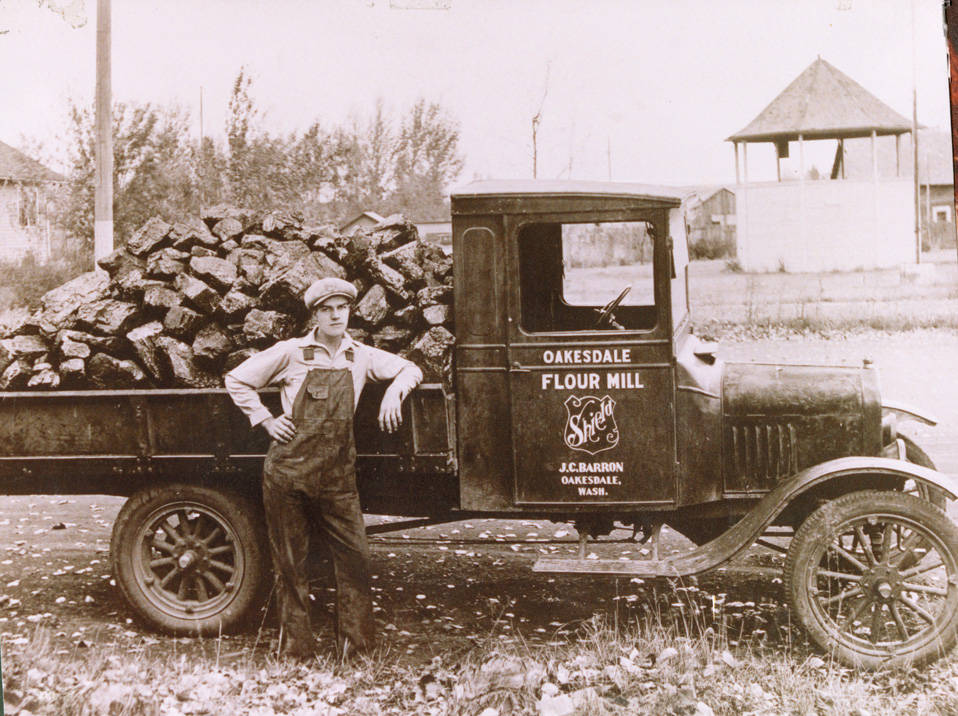
Oakesdale residents are fulfilling their dreams of retooling the mill with help from the Innovia Foundation, a community foundation based in Spokane, almost an hour’s drive away. For the better part of a decade, in an effort to bring people together and strengthen their communities, Innovia has deepened its engagement with the towns and small cities in its 20-county region.
Innovia is proving that community projects such as the mill give people common ground and an opportunity to put aside their divisions on politics, faith, and more.
“It doesn't matter that you're a Republican or a Democrat. It doesn't matter that you go to this church and they go to a different church. You are working together on something for your community.” Shelly O’Quinn, CEO
'A Genuine Love of People'
Innovia is the winner of the Council on Foundations' inaugural Building Together Award, which honors philanthropic efforts taking on work of bringing people together across lines of difference.
Innovia has tackled the region’s divisions in big ways and small — from book clubs to rural investments — and earned support from national funders like the Trust for Civic Life and the Aspen Institute.
“It’s evident that there is a genuine love of people and community undergirding the work,” wrote one of the judges who selected Innovia for the Council award.
Innovia works in a remarkably vast and diverse area. Straddling the Washington-Idaho border, it serves more than 1.2 million people over 40,000 square miles; the drive from north to south takes 10 hours. Within the region are six tribal nations, tiny towns and urban centers, mining and farming regions, and deep political schisms. Notably, this area is home to anti-government extremist groups and a church that anchors Christian nationalism across the country.
Said one judge: “Pluralism is more than a slogan or even aspiration; it's an absolute necessity given the challenges facing the region.”
Founded as the Spokane Community Foundation in 1974, Innovia worked largely as a "charity bank," O'Quinn says. “We were a very transactional community foundation — dollars in, dollars out,” O’Quinn says. “It was all about grantmaking.”
In 2017, the organization made a shift and began to use its power as a convener and regionwide resource to connect people and spark new work. Foundation officials increasingly spent time outside Spokane, getting to know community needs and building partnerships.
This engagement led to the creation of Leadership Councils in each of Innovia’s 10 subregions in 2020. Each is a diverse group of elected officials, nonprofit leaders, business executives, and others who collectively advise the foundation on its grantmaking in their area. The councils advocate for their communities and meet regularly to consider how Innovia funding might meet community needs.
The foundation puts “the onus on the leadership councils to really weigh in and advocate for a certain cause, organization, or program,” says Paul Kimmell, an executive with the utility company Avista and a member of a council that includes counties from Idaho and Washington.
These councils played a critical role in Innovia’s disbursement of more than $35 million in relief funds during the Covid-19 pandemic. When rural areas lacking broadband couldn’t get pandemic updates and alerts, for instance, councils suggested that Innovia make funds available to emergency response teams to update road signs with important news. “That was an ‘aha’ moment” for foundation officials, O’Quinn says.
“We live in Spokane, an urban area, and we can take Internet access for granted. A big chunk of our 20-county region cannot.” Shelly O'Quinn
Annual summits of Leadership Council members feature discussion and workshops on navigating differences and building community. This year’s speakers included Maryam Banikarim, founder of the Longest Table, a national nonprofit that organizes free, potluck-style meals at blocks-long tables in dozens of cities. Innovia is helping to host more than 60 Longest Table gatherings this summer.
Other Innovia programs include a book club that’s a partnership with the Spokesman-Review news outlet. Launched in 2023, the club features a facilitated community discussion about books focused on topics that range from racial healing to the reintroduction of wolves to the area. Innovia also has earmarked grants for groups tackling isolation and loneliness, including Veterans Outreach Center, which organizes meals, events, and social engagement for veterans who live largely on their own and the foundation’s Engage in Real Life partnership with the Spokane schools has led more than 18,000 students to join clubs, sports teams, and community and arts programs which research suggests fuels polarization and division. “We have a responsibility to get upstream and address some of the causes of division,” O’Quinn says.
Bridging, One Town at a Time
Innovia’s work in Oakesdale began when Larry Stanley, a foundation donor and Spokane business owner who had grown up in Oakesdale, asked the grantmaker to support community projects in the town, including the old mill, which appeared to be headed for demolition. After his father, a local barber, died, the town had organized a dance to raise money to help the family pay its medical bills.
At the start, Innovia gathered a small group of Oakesdale residents for conversations about what the mill’s restoration could mean for the town’s future. Foundation officials soon became a regular presence at town meetings, functions, and celebrations. “Their biggest goal always was to make the mill what Oakesdale wanted it to be,” says Conny Crow, a retired teacher who has lived in Oakesdale for 65 years. “People knew they could trust them.”
Innovia funded engineering and environmental-impact studies, then launched a campaign to buy the $200,000 building. Staff gave mill tours and helped organize town events, including a car show on the mill grounds during Oakesdale's annual harvest festival.
Foundation donors offered a $120,000 match, and "checks came in from all around the county," O'Quinn says. In 2024, after more than a year of fundraising, Innovia bought the building and handed it off to a county economic- and community-development agency overseeing the rehabilitation. Nearly half the town turned out for the first community meeting with county officials.
Oakesdale is part of Innovia's biggest community-building investment yet. Last year, the foundation began working in 10 rural communities — using a blueprint from Community Heart and Soul, a nonprofit specializing in resident-driven revitalization — to bring people together around a shared vision for their towns.
Crow is one of 15 Oakesdale residents leading the local effort. The group spans every decade from the 1940s to the 2000s, ranging from residents in their 20s to their 80s. "It's wonderful," she says. "We have a lot of different perspectives and skillsets."
The group will eventually choose a revitalization project. Early favorites: new playground equipment in the town park, or a restaurant — Oakesdale has no eatery or gathering spot.
Innovia's involvement, Crow says, is fueling spirit in a town whose best days seemed behind it. Attendance grows with every event, and turnout was strong on a recent tax levy vote.
"There's just a lot of excitement," she says. "Innovia has given people hope that we can grow here."