Our Shared Future: Integrating Approaches to Social Change


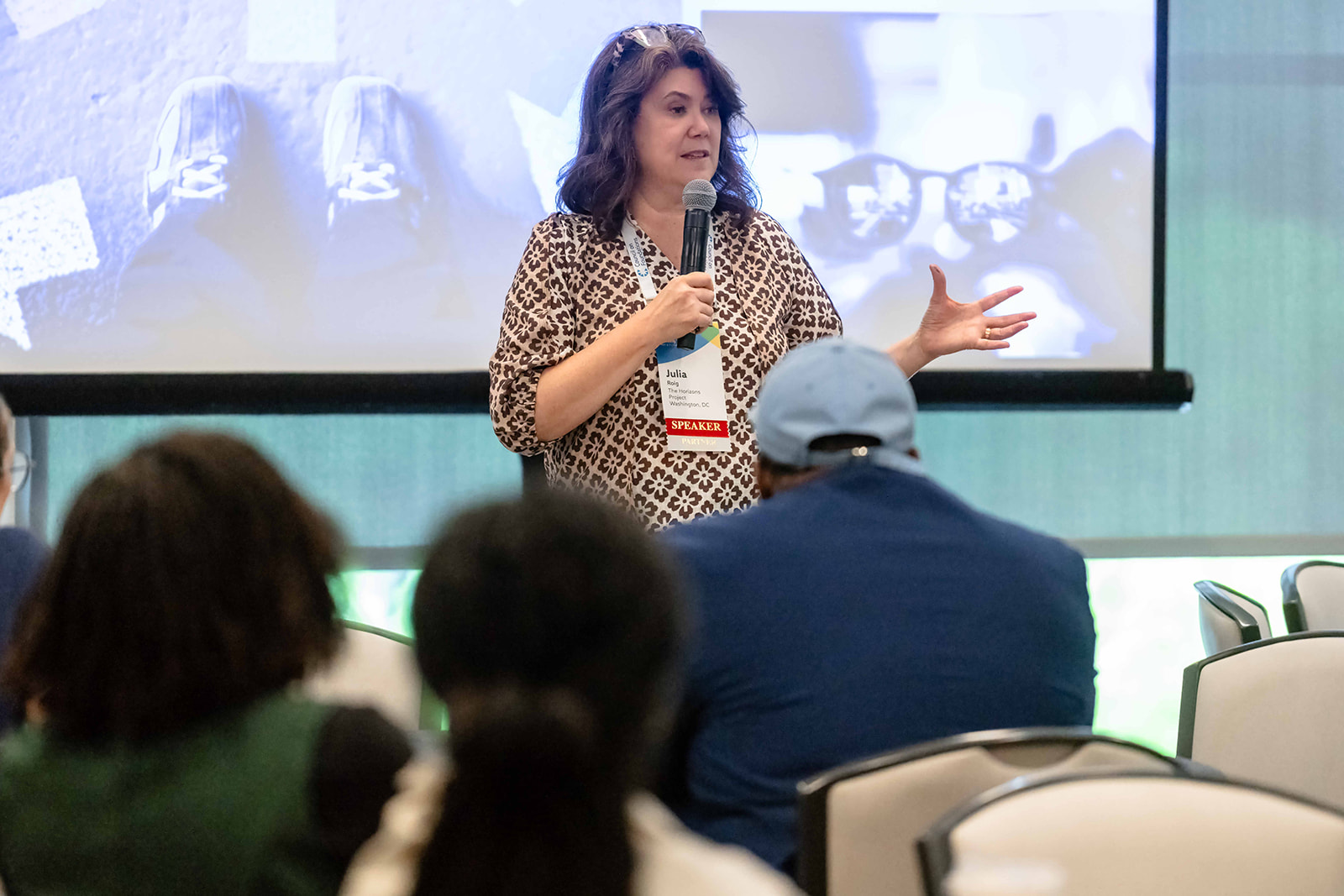
During the Council’s recent Building Together conference, the Horizons Project was pleased to present two workshops on our Block, Bridge, Build (BBB) framework. The unseasonally warm sun we enjoyed in Seattle that first week in May was in stark contrast with the stormy skies and tumult felt around the country from the immediate impact of the Supreme Court’s Callais decision. But that reality also provided some extra motivation to step squarely into the inherent tensions amongst the various approaches to social change: blocking harms and injustice, bridging across many lines of difference, and building new systems and institutions for our shared future.
Starting with Uncertainty
One of the initial building blocks of interacting with the BBB framework is to explore our relationship to uncertainty and what is happening to our brains in contexts of rapid change. Metaphors are a creative way of sharing perspectives, so we ask participants to share a metaphor of what uncertainty feels like and why:
- “Uncertainty is like a game of Super Mario Brothers, with the ground moving beneath my feet; or, like a game of Frogger because I’m trying to cross the road but don’t know if I can get across safely.”
- “Uncertainty is like having a huge ball of yarn that I’m trying to untangle, and I’m not sure if I’ll ever be able to knit that beautiful sweater.”
- “Uncertainty is like climbing a mountain with a group of friends, there are so many different paths we can take, but we have to figure it out together which way to go.”
Many of us react to uncertainty by trying to be overly controlling and certain about the actions we should take, and some of us might be overly flexible or constantly adapting to a shifting context as we seek the right way forward. We explored in our workshop how to walk the fine line of engaging with uncertainty in a healthy way.
Polarities and Navigating Natural Tensions
The second module we covered is polarity management, and how participants can recognize when two things are true at the same time, i.e. “both-and” thinking and not “either-or” (which can be especially difficult during times of high stress).
This is a meaty topic that deserves much more time, but during the workshop we grappled with the polarities of justice and mercy that are often in tension in social change work. Participants shared deeply about how tiring a mercy approach feels when you’re on the receiving end of injustice. And we talked about the upsides and downsides of these different approaches to our work. For example, justice-seeking without paths to redemption; and mercy-seeking without accountability.
Applying Block, Bridge, Build in the Real World
Finally, we explored a real-life case of a rural community in conflict over whether to approve a large AI data center to be built in its area. Participants self-selected into three groups according to where their natural inclination lies: Blocking the data center through protest and acts of civil disobedience; bridging with diverse members of the community to air the different perspectives and tradeoffs to find a way forward; or building a community-based plan for how to use the revenues from the center for needed infrastructure and job growth?
The three groups explored how their approaches fit together strategically. Blocking could buy time to allow the builders to deliberate within the community. Bridging could connect with other states grappling with similar challenges. Building could help with local decision-making and perhaps address national legislation of AI and the future of energy policy overall. Participants were able to integrate the various approaches and were nuanced in their systemic thinking of the valid and needed roles across the ecosystem of social change.
Accountability and Solace
We ended with a focus on accountability in philanthropy’s decision-making and how the BBB framework can help foundations clarify not only what decisions they are making, but how those decisions remain defensible under conditions of uncertainty, disagreement, and uneven public consequences. Decision accountability ultimately depends on whether institutions can explain how their decisions remain legitimate, particularly when communities experience those decisions differently.
We ended with a ritual. Everyone recited out load a different line from an inspiring poem by Richard Rohr that extols the virtues of the word “and.”
For more information about Horizons’ Block, Bridge, Build framework, and to find out about more in-depth training opportunities, please connect with us.
Julia Roig is the Founder and Chief Network Weaver of the Horizons Project.
Jarvis Williams is an Executive Decision Advisor who works with executive teams on democratic accountability, institutional decision-making, and strategy execution under pressure.