Pockets of Hope: Lessons from Working Across Differences
Veterans of a community foundation’s yearslong effort to build common ground in a diverse county talk about what works — and how to stand strong in tough times
Even after nearly a century of doing good in southeastern Pennsylvania, the Lancaster County Community Foundation (LCCF) was little known in the region. Established in 1924, it had served chiefly as a white-shoe grantmaker, quietly distributing funds from bank trusts.
Then, almost 20 years ago, the foundation moved to do more. Forging relationships with community leaders, it explored how to go beyond grants and leverage its connections and convening power to answer the county’s needs.
These discussions took the foundation to every corner of the region and began the work that is now one of its trademarks: building community and cohesion among the county’s 565,000 residents.
This is no easy task. The foundation serves a diverse area challenged by many of the country’s deep divisions along lines of faith, race, political ideology, class, age, and more. In Lancaster County, Amish farmers live and work alongside evangelical families. Rural parts of the county are strongholds for President Trump, while the more urban areas tilt liberal. The number of young Black, Latino, and Asian Americans has exploded in recent years amid a rapid influx of immigrants and refugees; today, more than a quarter of county residents under the age of 18 are people of color, compared to only 7% of those 65 or older.
Building Trust and Belonging
As part of its equity commitment, the foundation has prioritized work to help the county’s people of color and its newcomers get a foothold and feel that they belong. It has established an Equity Fund and giving circles that raise money for the LGBTQ+ community and Asian American and Pacific Islanders.
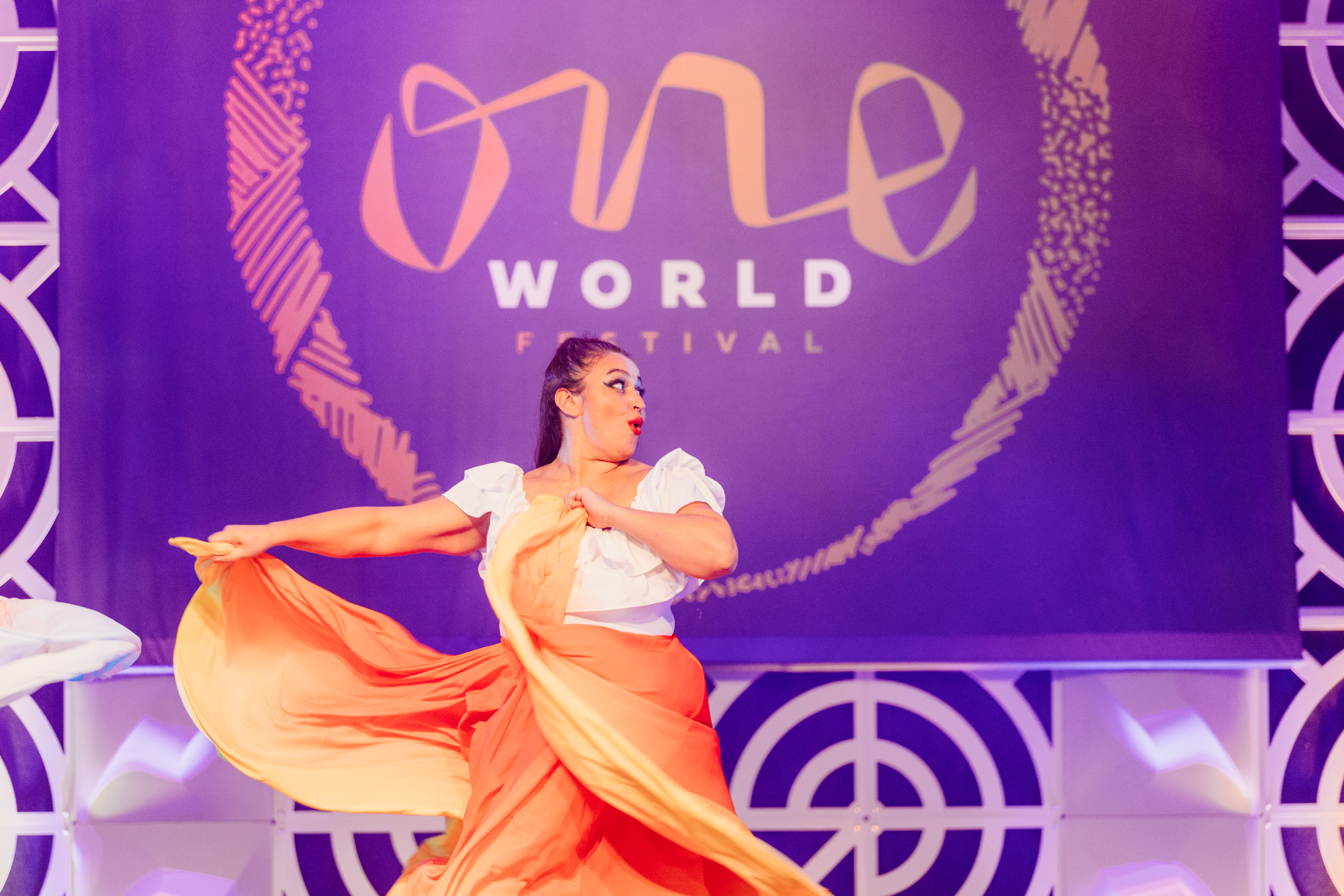
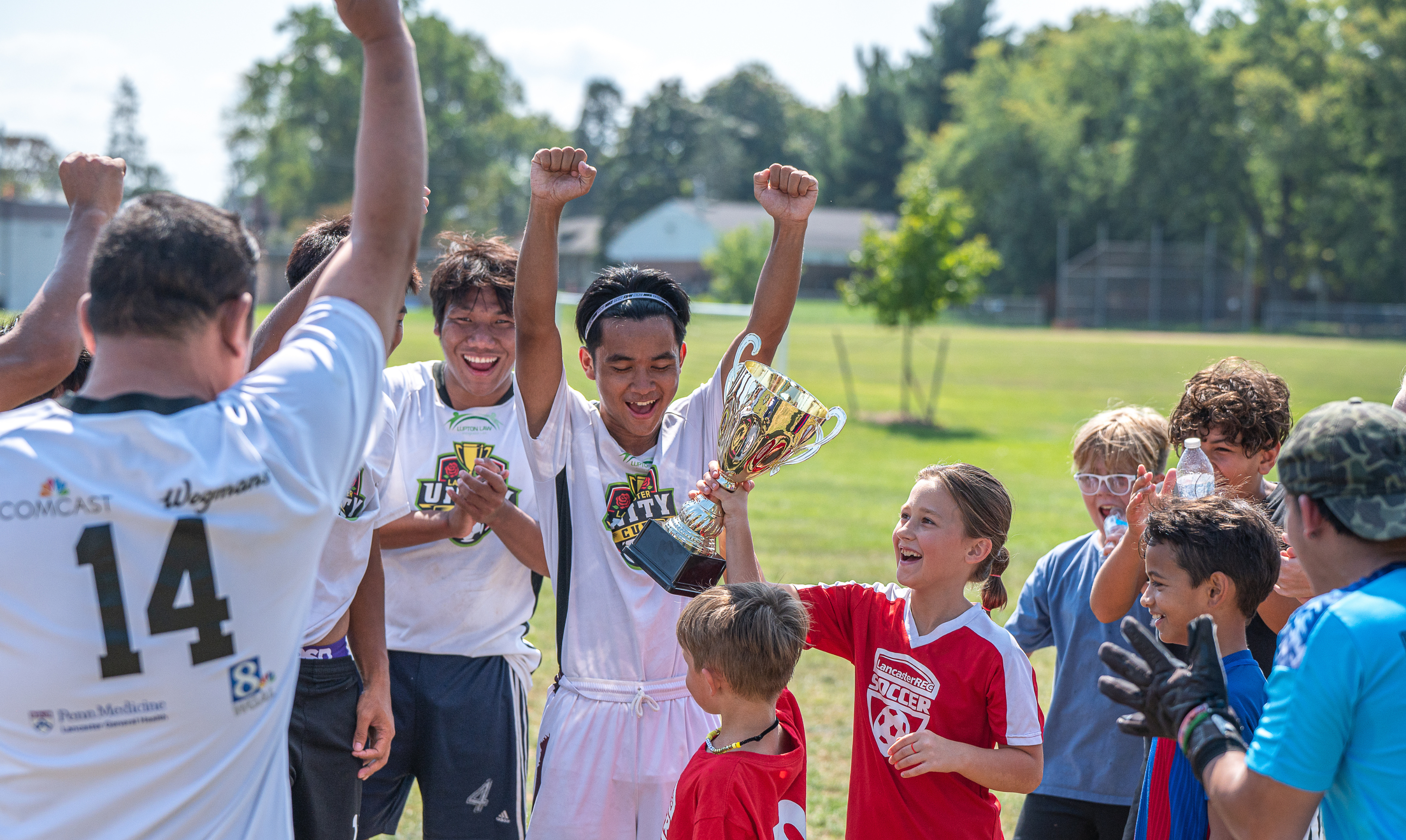
The foundation also has supported programs that aim to bring together people across differences. Grants have backed the expansion of the popular Girls on the Run program to include marginalized communities; the planning of a community farm; the creation of a weeks-long Unity Cup soccer tournament; and the launch of a multicultural celebration called the One World Festival.
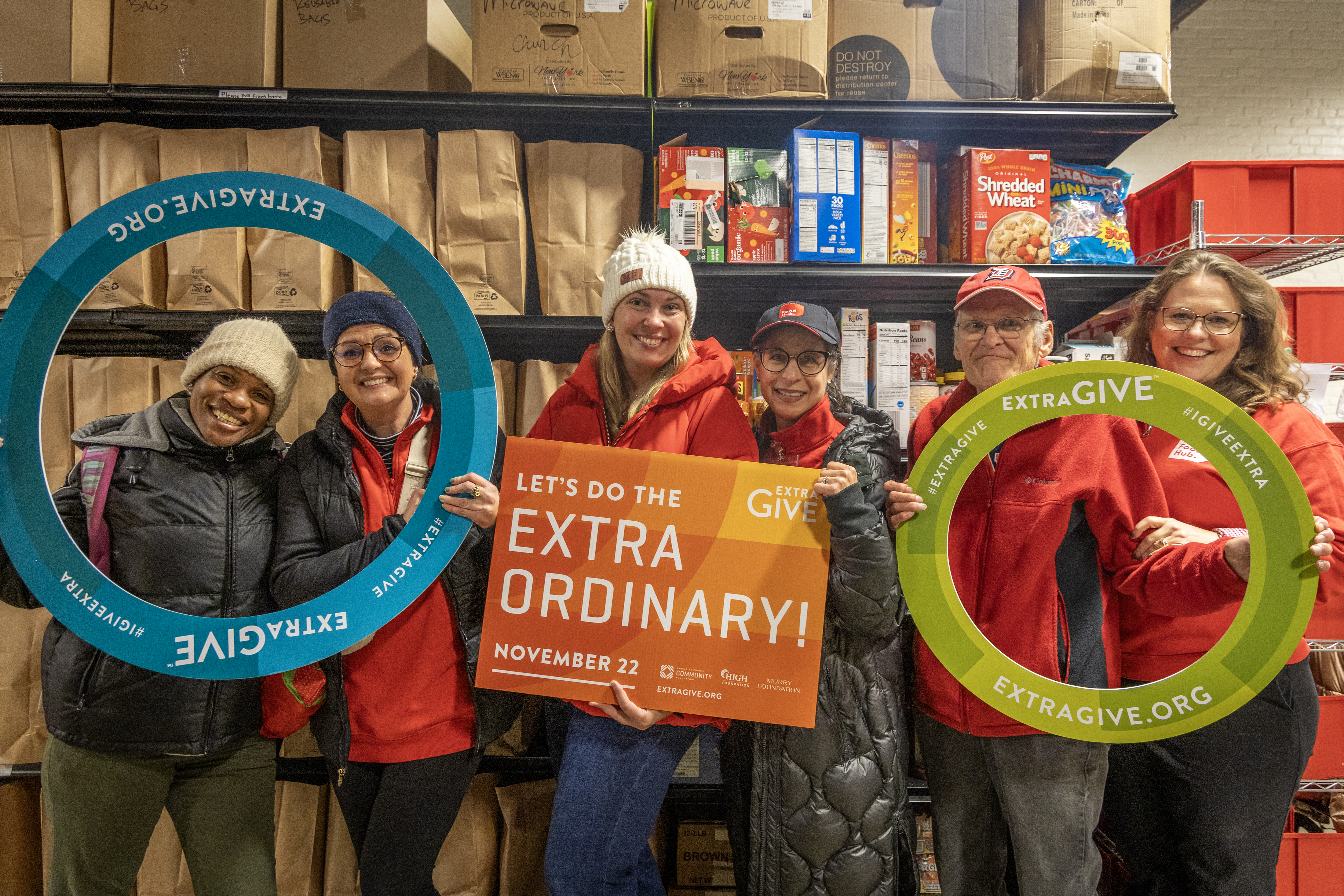
The foundation’s giving day, ExtraGive, launched in 2012 and has raised more than $120 million for some 500 groups. These include such liberal-coded groups as Planned Parenthood and conservative faith-based organizations opposed to abortion.
Several LCCF staff have participated in the Council on Foundations Bridging Differences Leadership Cohort, which teaches how to build constructive dialogue and understanding across differences. Most recently, the foundation won an Aspen Institute grant to celebrate and support “weavers” — individuals and organizations who build trust and belonging in their community.
At times, the foundation’s work has put it in the middle of controversy. A few years ago, it began to ask and then require organizations participating in ExtraGive to publicly post their antidiscrimination policies along with their financial statements. Foundation officials did not stipulate the content of the policies but argued that such transparency would help donors better understand the organizations participating in ExtraGives.
The move angered some conservative Christian groups, who argued that the new requirement targeted their views that homosexuality is immoral. Progressives, meanwhile, argued the foundation should go further and ban organizations whose antidiscrimination policies they saw as toothless.
“We were equal opportunity offenders,” says CEO Sam Bressi. Bressi was harassed online and in the community and was forced to limit his public activities for a time.
Today, however, that storm has largely passed, and the foundation continues its work to bridge divides and bring people together. Some groups that boycotted ExtraGive have returned, Bressi says.
“We've walked through that crucible moment, and so we feel like we're better positioned — maybe more empowered,” Bressi says. “We know how to handle things a little better."
10 Tips for Working Across Differences
We asked Bressi and Executive Vice President Tracy Cutler to share their perspective and advice on how community foundations can help work across differences in their own communities.
To build trust, connect with people on their turf.
When Bressi became CEO in 2008, he traveled the county, meeting with organizations and people in their offices and homes and at their events. Those who knew the foundation saw it chiefly as an elitist organization working from an ivory tower, Bressi says.
“We had to go to them,” he says. “They didn’t trust us yet. Even if we had invited them to come to our events, they would have been like: ‘Why would I go to their thing? They're not my people.’”
Such outreach remains paramount for the organization today. Foundation staff spend significant time out of the office working to build the long-term relationships that lead to trust, Cutler says. “You have to be very intentional.”
This is even more true when there are disagreements, she adds. “You have to continue to show up even when you get the feedback that people are unhappy.”
Signal that you welcome everyone.
The foundation also tweaked its events to make them more welcoming to communities that didn’t know the grantmaker or see it as a resource or partner. At its ExtraGive celebration concert, for instance, it featured a rap artist and salsa music. Over time, even more traditional events like the foundation’s annual meeting started to draw a broader representation of the community.
Look to the community for answers.
The foundation invites volunteer grant reviewers to help determine how to distribute grants, including from the Equity Fund and the LGBTQ+ Giving Circle, which both launched after the polarizing isolation of the pandemic. “Those were very concrete actions to demonstrate that we believe in our community, that we trust our community,” Cutler says. “It’s enormously powerful to come together with people and believe that the answers are in the room.”
Remember that divisions go beyond red-blue politics.
“Community foundations have to keep that in focus,” Bressi says. “How do we find common ground between those who have an abundance of resources and maybe got a tax cut and those who just lost their SNAP benefits?”
Expect pushback.
Work that generates only praise suggests you’re working inside a bubble of like-minded people, Bressi says. “If all we're doing is speaking to the people who agree with us, we're not going to move the needle.”
Be curious and lean into disagreements.
Bressi has changed how he approaches interactions over differing points of view. Initially, he saw these chiefly as opportunities to win people over to his viewpoint. “I was showing up with a pretty hard-line view on what they were doing wrong and what we were getting right,” he says. “And that's no way to build common ground.”
He credits Council on Foundations programs for helping him learn to listen and explore opposing viewpoints as a means to build trust, respect, and a long-term relationship. Often, he says, common ground emerges over this shared desire: “We want to make Lancaster County a better place for the people who live here.”
Make sure your core values are clearly defined and articulated.
Such clarity of purpose helps staff engage productively when there are disagreements and emotions run high. “You can stand there with confidence and say, ‘I hear you. Tell me more.’ But then you can say: ‘This is us; this is what we stand for. And it’s OK that we disagree.’”
The loudest voices don’t always represent the majority viewpoint.
Says Bressi: “There's this big, beautiful center of our community that is willing — even with fundamental differences that are values-based — to respectfully engage. And that's who we're looking for.”
Take time for self-care.
“When you're swimming upstream, it's tiring,” Bressi says. Recent events designed to help the staff step back include a nature walk and a guided watercolor painting session.
Don’t despair.
Organizations working in global conflict zones have advised the foundation that even seemingly insignificant moments can lead to change. “Once you’re on the other side of conflict, you can see that small efforts to create spaces for people to come together are the key starting points.”
“We're finding little pockets of hope, and I think that's our role,” Bressi says. “If the culture crashes over us, so be it. But we're working to find those pockets of hope to turn the tide.”